Home Clubs Dog style kungfu History Information

History


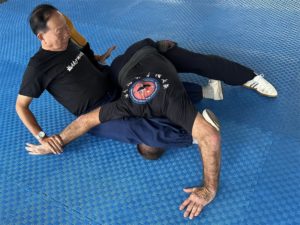
Grand Master Chen Yijiu

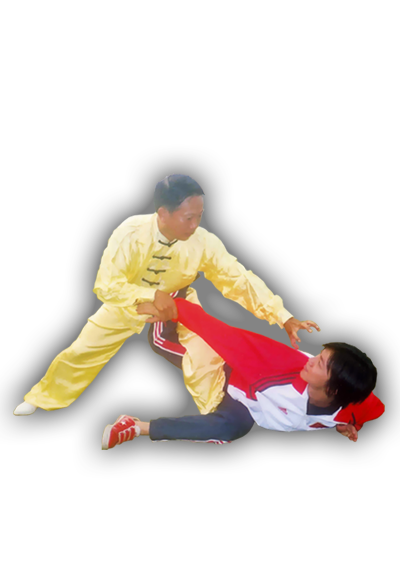
Master Zai Pei Lin
Master Zai Pei Lin

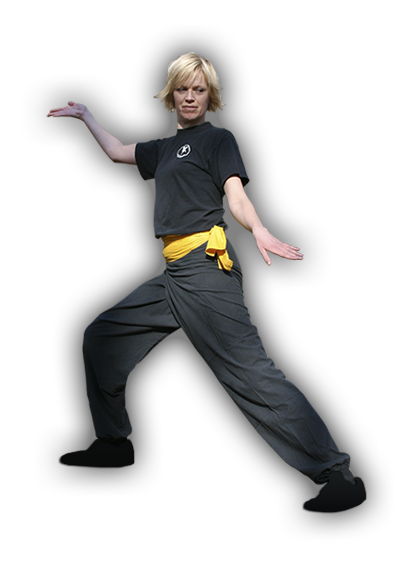
ZhengQuan Lin
ZhengQuan Lin

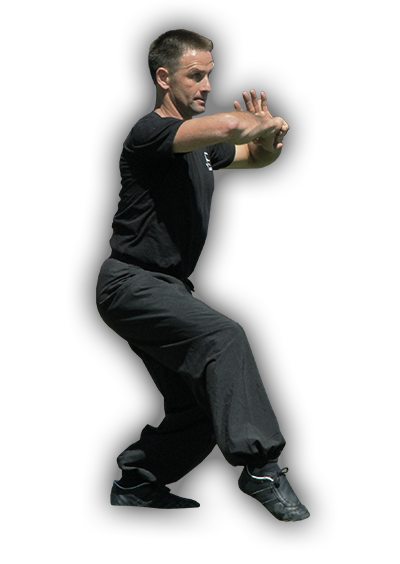
Neil Johnson
Neil Johnson

The History of DiShu Quan (Dog Boxing System)

There is a widely spread Kungfu saying in Fujian, China, that is, “三寸金莲贴膏底”. The first four Characters, “三寸金莲” literally means three inches of feet, referring to the tiny feet of a women, a result of years of foot-binding required under the feudal systems in old China. The latter three Characters, “贴膏底”, literally means sticking a paste to the sole, referring to the paste-like iron plates stuck to the bottom of the women’s feet. Altogether, this Kungfu saying means that a seemingly weak woman is in fact a skilled Kungfu fighter bearing the unique techniques. Since the women, generally, is not as strong as men in terms of physical conditions, but the styles that the women studied or created naturally pay more attention to the fighting techniques. Consequently, those styles that the women studied or created seem to be cleverer, more hidden, and more changeable. On the list of the women’s Kungfu styles in Southern China, finds the DiShu Quan (地术拳)(or the Ground Lying Kungfu) standing along with other styles such as the White Crane and the Woman Style. As most of the DiShu Quan techniques are executed while the practitioners are lying down on the ground, it is also known as the Ground Lying Kungfu. Moreover, much of its movements seem to mimic the movements of a dog, the locals also call it Dog Style. DiShu Quan is one of the Southern Shaolin Kungfu systems. Though DiShu Quan enjoys a high reputation in Fujian Province in China, only a handful of people really get access to it due to a great many historical factors. For years, DiShu Quan remains as a rare and secret Kungfu clan.


The origins and history of DiShu Quan to today

In the old time, DiShu Quan was a secret Kungfu studied by nuns and was kept in the Buddhist nunnery only. Legend has it that DiShu Quan began to spread to the folk when the Ming Dynasty collapsed (1368-1644), which was followed by the Qing Dynasty. When the Ming Dynasty fell in 1644, the monks in the Southern Shaolin Temple and the nuns in the nunneries in Fujian, joined the rebellion headed by the Ming loyalists, trying to overthrow the reign of the Qing Dynasty. To suppress the rebellion, the Qing authorities sent out the soldiers to destroy the rebellion and to kill the rebels. Consequently, the rebels scattered and many of them hid themselves in the folk. Among those came a nun called SiYueDaShi, “四月大师”, who once lived at the LianHua Nunnery (莲花庵) in the east of QuanZhou City, Fujian. SiYueDaShi fled to YongTai (永泰县) County, Fuzhou, and was taken in by an old lady from a Chen family. Feeling a debt of gratitude for the old lady’s clemency, SiYueDaShi, in return, decided to pass DiShu Quan to Biao Chen (陈彪), the old lady’s son, who was enthusiastic about Kungfu. One day, the nun, SIYueDaShi said to Biao Chen, “I would like to teach you an unique Buddhist Kungfu System.” The moment Biao Chen started his training, he found DiShu Quan’s depth of unique features. Biao Chen kept DiShu Quan in secrecy through out his life and later he passed it to his son, AYin Chen (陈阿银). On defending for the justice for a weak man, AYin Chen killed a bully in his village. To avoid being captured, AYin Chen fled to Singapore and began to work as a Kungfu coach there, teaching Tiger style instead of DiShu Quan. At the same period, a man fled to Singapore to avoid the famine striking his hometown, Fuzhou, Fujian. The man was called YiJiu Chen (陈依九). In Singapore, YiJiu Chen hired a small shop and managed to make a living by making some gold-or-silver decorations. One day, YiJiu Chen wandered into the Kungfu center where AYin Chen worked. Due to the fact that they came from the same city, that encounter proved to be very amiable. Their relationship grew over time. Later, AYin Chen passed DiShu Quan to YiJiu Chen in secrecy. In 1937, YiJiu Chen returned to his hometown, Fuzhou, Fujian. In this way, DiShu Quan once more, began to grow in Fujian.

Master Zai Pei Lin was one of YiJiu Chen’s students and began to train DiShu Quan in 1964 at the age of 20. He was then selected a member of a political working team. Knowing that one of his team mates studied martial arts, he asked him to teach him. He was called ZhengLu Chen, one of the sons of Grand Master YiJiu Chen. Master ZhengLu Chen taught Zai Pei Lin the Three Wars, pattern. He trained under Master ZhengLu Chen for about six months. Later, Master ZhengLu Chen brought Zai Pei Lin home and introduced him to his father, the Grand Master YiJiu Chen. As Master ZhengLu Chen and I were team mates, He called the Grand Master YiJiu Chen “Uncle”, which unexpectedly was used throughout the rest their long years.. Zai Pei Lin asked if the Grand Master YiJiu Chen could accept him as his disciple and he nodded his head and agreed.

Several days after the encounter, a traditional admission ceremony was held for him together with another Kungfu brother. The Grand Master YiJiu Chen wrote their names, birthdays and addresses on a red folder and Incense were burnt. The Grand Master YiJiu Chen was sitting in an armchair. They each gave him three kowtows before him. Later, they became the indoor disciples.

Master Zai Pei Lin passes on the Di Shu style to his devoted son ZhengQuan Lin and has many devoted students training today in Fuzhou.

In 2006 Neil Johnson from England traveled to China to meet with Master Zai Pei Lin and his son ZhengQuan Lin. Over the last thirteen years Neil trained in White Crane Kungfu from Fujian and was so impressed with the knowledge and depth of their skill that he begun his training in DiShu Quan, Having a very good foundation in White Crane allowed Neil to quickly progress in the art of DiShu. Neil now teaches classes in England after being accepted as a student of Master Zai Pei Lin and being given a stone of seal to spread the system out side of China.

The DiShu system is just the same today and only taught to very few students in the WCFA club if they have proved their loyalty over the years past.

The Hardship Of Dog Boxing Continues….